 Skip to content

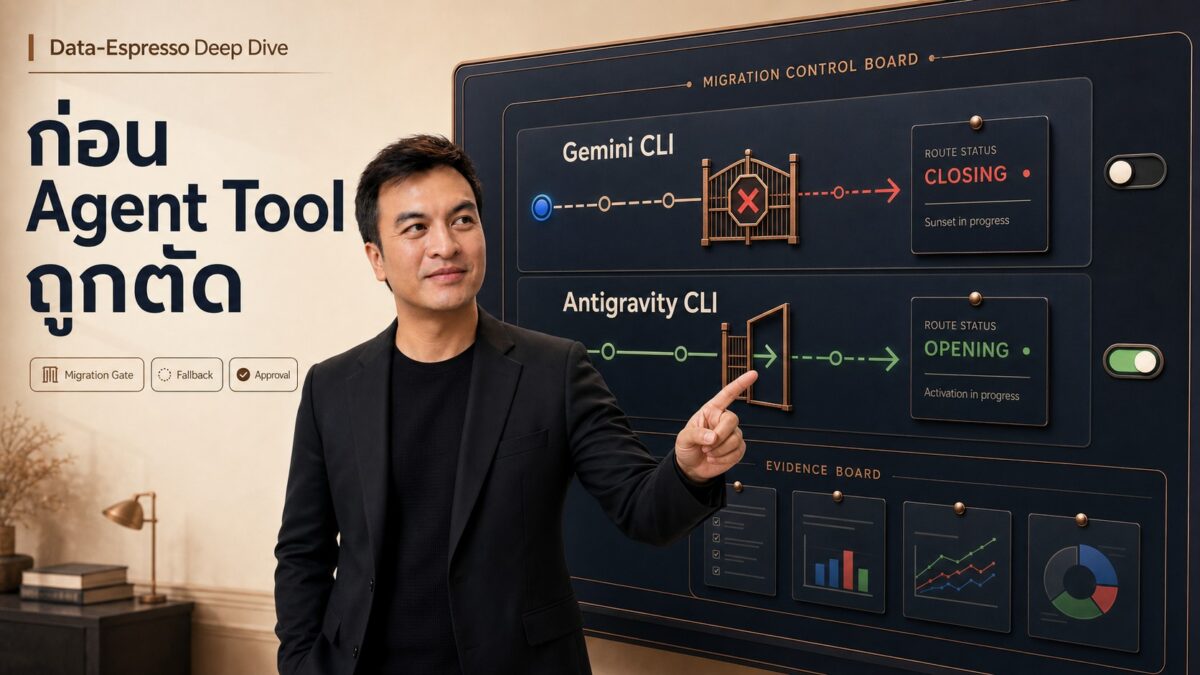
Gemini CLI จะตัดผู้ใช้ฟรีพรุ่งนี้: บทเรียนเรื่อง Agent Migration Gate
Google ประกาศไว้ใน Google Developers Blog ว่า Antigravity CLI เปิดให้ใช้ตั้งแต่วันที่ 19 พฤษภาคม 2026 และในวันที่ 18 มิถุนายน 2026 Gemini CLI กับ Gemini Code Assist IDE extensions จะหยุด serve requests สำหรับผู้ใช้ Google AI Pro/Ultra รวมถึงผู้ใช้ฟรีผ่าน Gemini Code Assist for individuals
ถ้าอ่านแบบ product update เรื่องนี้อาจดูเป็นการย้ายจาก Gemini CLI ไป Antigravity CLI
แต่ถ้าอ่านแบบ operator ผมว่า signal นี้สำคัญกว่า:
ทีมที่เริ่มใช้ AI Agent ใน workflow จริง ต้องมี migration gate ก่อน tool เปลี่ยนแล้วงานสะดุด
1) เกิดอะไรขึ้น
Google บอกว่า Gemini CLI พิสูจน์แล้วว่า terminal เป็น interface ที่ดีมากสำหรับ agentic tasks
แต่ความต้องการของผู้ใช้เปลี่ยนไป จาก agent ตัวเดียวใน terminal ไปเป็นหลาย agent ที่สื่อสารกัน แบ่งงานกัน และต้องใช้ backend เดียวกับ workflow ส่วนอื่น
Google จึงรวม effort ไปที่ Antigravity ซึ่งเป็น agent-first development platform และออก Antigravity CLI เป็น terminal experience ใหม่
สิ่งที่ Google ระบุว่าจะยังคงมีใน Antigravity CLI ได้แก่:
- Agent Skills
- Hooks
- Subagents
- Extensions ที่ย้ายแนวคิดไปเป็น Antigravity plugins
- asynchronous workflows สำหรับงานใหญ่ที่ให้หลาย agent ทำงานเบื้องหลัง
- unified architecture ที่ใช้ agent harness เดียวกับ Antigravity 2.0
เส้นตายสำคัญคือ 18 มิถุนายน 2026 สำหรับผู้ใช้ consumer/free บางกลุ่ม
ส่วน enterprise customers ที่ใช้ Gemini Code Assist Standard/Enterprise license หรือ Gemini Code Assist for GitHub ผ่าน Google Cloud ยังไม่กระทบตามประกาศของ Google และ Gemini CLI ยังเข้าถึงได้ผ่าน paid Gemini / Gemini Enterprise Agent Platform API keys
2) ทำไมเรื่องนี้สำคัญกว่าการเปลี่ยน CLI
เพราะหลายทีมเริ่มเอา AI Agent ไปอยู่ในงานจริงแล้วครับ
ไม่ใช่แค่ถามตอบเล่น ๆ แต่ใช้กับงานแบบนี้:
- เขียน code และสร้าง pull request
- scan repo ก่อน deploy
- scaffold cloud infrastructure
- สรุปข้อมูลลูกค้า
- ทำ research หลายแหล่ง
- generate report รายวัน
- ต่อ MCP / cloud / database / ticket system
พอ agent tool เปลี่ยน policy หรือย้าย platform สิ่งที่แตกไม่ใช่แค่คำสั่งใน terminal
สิ่งที่แตกอาจเป็น operating rhythm ของทีม
ตัวอย่างเช่น:
- cron ที่เรียก CLI เดิมไม่ทำงาน
- developer ใช้ account consumer แต่ workflow กลายเป็นงานทีม
- subagent config หรือ skills บางตัวไม่เทียบเท่าเดิม
- approval/hook เดิมหายไปตอนย้าย tool
- log proof ไม่อยู่ที่เดิม
- cost ย้ายจาก subscription หนึ่งไปอีก billing path
- งานที่เคยรันได้ตอนกลางคืนต้องกลับมาใช้คนกดเอง
นี่คือเหตุผลที่ agent adoption ไม่ควรถูกจัดการเหมือนลง app ใหม่
มันควรถูกจัดการเหมือนย้ายระบบปฏิบัติการย่อยของทีม
3) Operator Lesson: อย่ารอให้ tool ดับก่อนค่อยทำทะเบียน
บทเรียนจาก Gemini CLI -> Antigravity CLI คือ:
ถ้า workflow ใดเริ่มพึ่ง AI Agent มากพอที่จะทำให้งานช้าลงเมื่อมันหายไป workflow นั้นต้องมีทะเบียน
ทะเบียนนี้ไม่ต้องซับซ้อนตั้งแต่วันแรก แต่ต้องตอบได้อย่างน้อยว่า:
- ใครเป็น owner ของ workflow นี้
- ใช้ agent tool / model / account / API key อะไร
- แตะ repo, data, customer system หรือ cloud หรือไม่
- มี approval gate ตรงไหน
- มี fallback manual path หรือ tool สำรองไหม
- มี proof/log ให้ตรวจย้อนหลังได้ไหม
- ถ้า tool เปลี่ยน policy ต้อง test อะไรก่อนย้าย
สำหรับ SME ไทย ประเด็นนี้สำคัญมาก เพราะหลายทีมเริ่มจาก account ส่วนตัว, CLI ในเครื่อง developer, extension ใน IDE หรือ subscription รายเดือนที่ดูเหมือนเล็ก
แต่พอ workflow เริ่มมีผลกับงานจริง นั่นไม่ใช่ของเล่นส่วนตัวแล้ว
มันคือ part หนึ่งของ operating system บริษัท
4) ทำไม Antigravity CLI เป็นสัญญาณของ agent tool รุ่นถัดไป
Google ไม่ได้พูดแค่ว่า CLI ใหม่เร็วขึ้น
โพสต์นี้เล่าว่า Antigravity CLI ถูกออกแบบให้รองรับ asynchronous workflows และใช้ architecture เดียวกับ Antigravity 2.0
แปลเป็นภาษาธุรกิจคือ:
agent tool กำลังขยับจาก command-line assistant ไปเป็น work surface ที่มี backend, harness, subagents, skills, hooks, plugins และ workflow state
เมื่อเครื่องมือมี state มากขึ้น migration ก็มีความเสี่ยงมากขึ้น
ย้าย prompt อย่างเดียวไม่พอ
ต้องย้าย rules, hooks, skills, subagent definitions, permission model, logs, billing, deployment scripts และวิธี review ด้วย
Operator Kit: Agent Tool Migration Gate 10 ข้อ
ใช้ checklist นี้ก่อนย้ายจาก Gemini CLI ไป Antigravity CLI หรือก่อนผูก workflow สำคัญกับ agent tool ตัวไหนก็ตาม
- Inventory
เขียนรายชื่อทุก workflow ที่ใช้ agent tool อยู่ตอนนี้ เช่น coding, research, report, deploy, support, analytics
- Owner
ระบุคนรับผิดชอบต่อ workflow นั้น ไม่ใช่แค่คนที่ติดตั้ง tool ครั้งแรก
- Criticality
แยกว่า workflow ไหนเป็น experimental, useful, business-critical หรือ production-adjacent
- Access Map
บันทึกว่า agent แตะอะไรได้บ้าง: repo, file, browser, database, cloud, CRM, email, ad account, customer data
- Account/Billing Path
เช็กว่าใช้ consumer account, team license, enterprise license, API key หรือ cloud billing project ใด
- Config Portability
เทียบสิ่งที่ต้องย้าย: skills, hooks, subagents, extensions/plugins, MCP servers, environment variables, allowlists, deny rules
- Approval Gate
action ที่เสี่ยงต้องยังมีคน approve เช่น public publish, email send, DNS, pricing, production edit, cloud spend, customer data export
- Fallback Path
ระบุ manual fallback หรือ tool สำรอง ถ้า agent tool หลักใช้ไม่ได้ในวันทำงานจริง
- Proof Run
ก่อนย้าย ให้รันงานตัวอย่างหนึ่งรอบและเก็บ proof: input, diff/output, logs, reviewer, error, cost estimate
- Cutover Decision
อย่าเปลี่ยนทุก workflow พร้อมกัน เริ่มจาก low-risk workflow แล้วค่อยขยับไปงานที่แตะระบบจริง
5) Data-Espresso จะเอาไปใช้ยังไง
สำหรับ Data-Espresso ผมมองเรื่องนี้เป็น operating rule มากกว่า product preference
เราไม่ควรผูกงานสำคัญกับ agent tool ตัวเดียวแบบไม่มี fallback
เวลาจะใช้ Claude Code, Codex, Gemini CLI, Antigravity, Cursor, OpenCode, Hermes หรือ agent platform อื่น สิ่งที่ควรถามก่อนคือ:
- งานนี้เป็นงานทดลองหรือเริ่มกระทบลูกค้าแล้ว
- tool นี้มี approval boundary พอไหม
- ถ้า provider เปลี่ยน policy เราจะรู้ก่อนงานพังไหม
- proof อยู่ที่ไหน
- ใครตัดสินใจ cutover
ถ้าตอบคำถามเหล่านี้ไม่ได้ แปลว่าเรายังไม่ได้มี AI Agent operating system
เรามีแค่ agent tool ที่ใช้งานสะดวกในวันนี้
สรุป
Google ย้าย Gemini CLI consumer/free path ไปสู่ Antigravity CLI ไม่ใช่แค่ข่าวเครื่องมือใหม่
มันเป็น reminder ว่า AI Agent workflow มี dependency จริง และ dependency นั้นต้องถูกจัดการเหมือนระบบงาน
ก่อนจะถามว่า agent ตัวไหนฉลาดกว่า
ให้ถามก่อนว่า:
ถ้า agent tool นี้ใช้ไม่ได้พรุ่งนี้ งานอะไรจะหยุด และใครเป็นคนตัดสินใจย้าย?
คำตอบของคำถามนี้คือจุดเริ่มต้นของ Agent Migration Gate