
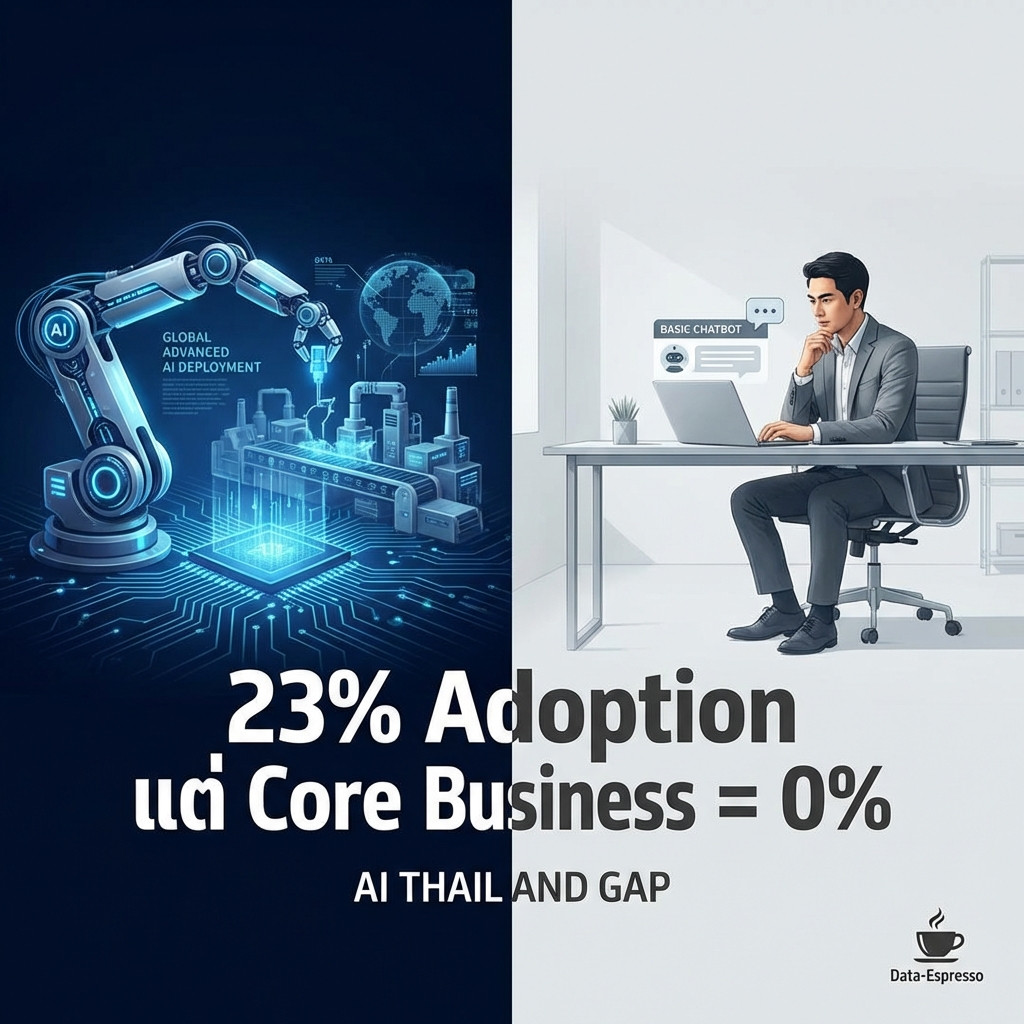
Thailand’s AI Agent Gap: 23% Adoption แต่ Core Business ยังเป็น 0% — อะไรที่ขาดหายไป?
TL;DR: ไทยใช้ AI เพิ่มขึ้น 130% ในปีเดียว แต่ยังไม่มีองค์กรไหน deploy AI เข้า Core Business ได้แบบเต็มรูปแบบ ขณะที่ global leaders ใช้ AI control ระบบการผลิตแล้ว — นี่คือสิ่งที่ต้องแก้ถ้าไม่อยากตกขบวน
—
The Adoption Paradox
ตัวเลขจาก CyberNews AI Adoption Index 2025 น่าภาคภูมิใจ — ไทยกระโดดจาก 10% (2024) เป็น 23% (2025) ในการใช้ AI tools ขึ้นมาอันดับ 55 ของโลก การเติบโต 130% ภายในปีเดียวถือว่า explosive growth
แต่ตัวเลขนี้ซ่อน paradox ที่น่ากังวลไว้
ขณะที่นักเรียนไทยกว่า 90% และครู 80% ใช้ Generative AI ประจำในการเขียน สรุป และทำ research — องค์กรธุรกิจส่วนใหญ่ยังอยู่ใน phase ทดลอง (Pilot) หรือ deploy AI แค่ใน low-risk functions เช่น Customer Service และ IT Operations
จุดนี้แหละที่น่าตกใจ: เราใช้ AI เป็น “เครื่องมือส่วนตัว” เก่ง แต่ใช้เป็น “เครื่องจักรธุรกิจ” ยังไม่เป็น
—
The Competitive Gap ที่ไม่มีใครพูดถึง
จากเวที “AI-Powered Workplace 2030” ที่ Microsoft Thailand จัด — คุณโภชร อารยะกarnkul CEO ของ Bluebik Group ให้ข้อมูลที่ตรงไปตรงมา:
“ไทยยังไม่มีองค์กรไหน deploy AI เข้าไปใน Core Business แบบเต็มรูปแบบ”
ขณะที่ global leaders ก้าวไปไกลแล้ว:
- ใช้ AI ทำ end-to-end decision-making ใน core processes
- Manufacturing operations ที่ AI control robotic systems ทั้งระบบ
- Human personnel ทำหน้าที่ strategic oversight อย่างเดียว
นี่ไม่ใช่เรื่อง distant future — นี่คือสิ่งที่เกิดขึ้นแล้วในองค์กรระดับโลก วันนี้
Gap นี้จะกลายเป็นความเสี่ยงด้าน competitiveness ถ้าไทยเรายังอยู่แค่ chatbot กับ content generation
—
2026: The Tipping Point
Gartner ทำนายชัด:
- ปี 2026 — 40% ของ enterprise applications จะมี task-specific AI agents (ขึ้นจาก <5% ในปี 2025)
- แต่ถ้าทำ fundamentals ผิด — 40% ของ AI agent projects จะถูกยกเลิกภายในปี 2027
IDC สนับสนุนทิศทางเดียวกัน:
“By 2027, agentic automation will enhance capabilities in over 40% of enterprise applications”
Forrester เห็นตรงกันว่า 2026 คือปีที่ AI agents ย้ายจาก lab สู่ production deployments จริงจัง
แต่มีข้อแม้สำคัญ: initiatives เหล่านี้จะ fail ถ้าไม่มี governance framework และ ROI ที่ชัดเจน
—
3 Barriers ที่ขวางไทยไว้
Bluebik Group วิเคราะห์ barriers 3 ประการที่องค์กรไทยต้องเผชิญ:
1. People — AI Literacy ยังไม่พร้อม
บุคลากรต้องปรับตัว แต่ AI literacy capabilities โดยรวมยังต่ำ การยกระดับทักษะนี้เป็น priority เร่งด่วน
Action Item: ลงทุนใน AI training แบบ hands-on ไม่ใช่แค่ seminar ฟังเล่น — ต้องใช้งานจริงใน context งานตัวเอง
2. Process — Business กับ IT ยังคุยกันไม่รู้เรื่อง
Business teams เข้าใจปัญหาแต่ไม่รู้ tech IT teams มี technical expertise แต่ไม่เข้าใจ context ธุรกิจ
การ integrate AI เข้า workflow เดิมต้องการ communication และ collaboration ที่แน่นกว่านี้มาก
Action Item: สร้าง cross-functional AI task force ที่มี authority ตัดสินใจจริง ไม่ใช่แค่คุยกัน
3. Technology — Infrastructure, Data, Governance
- Infrastructure: ยังไม่พร้อมสำหรับ AI workload ที่ต้องการ
- Data Quality: 80-90% ของ enterprise data เป็น unstructured data ที่ยังไม่ harmonized
- Governance: ไม่มี framework สำหรับ agent permissions, fail-safes, monitoring
Action Item: เริ่มจาก cloud infrastructure ที่ scale ได้ และวาง governance framework ก่อน deploy อะไรซักอย่าง
—
AI Agents vs Chatbots — ต่างกันอย่างไร?
หลายคนยังสับสนระหว่าง AI agents กับ chatbots ที่ใช้อยู่
| Feature | Chatbot | AI Agent |
|---|---|---|
| Planning | ตอบตาม script | Plan sequence of tasks ได้เอง |
| Decision | Rule-based | ตัดสินใจตาม changing conditions |
| Execution | รอคำสั่ง | Execute work ด้วย minimal supervision |
| Integration | แยก standalone | Integrated เข้า core systems |
| Use Case | Q&A, simple tasks | Invoice reconciliation, forecasting, security monitoring |
ตัวอย่าง use cases ที่ global enterprises ทำแล้ว:
- Customer Service: Handle refunds, escalations, omnichannel support — ประหยัด 40+ ชั่วโมงต่อทีมต่อเดือน
- Finance & Operations: Automate invoicing, forecasting, expense auditing — เร็วขึ้น 30-50%
- IT Infrastructure: 70% ของ enterprises จะ deploy agentic AI ใน IT operations ภายในปี 2029
—
Multi-Agent Systems: The Next Wave
Forrester และ Gartner เห็นตรงกันว่า 2026 คือปีแห่ง multi-agent systems — specialized agents หลายตัวทำงานร่วมกัน:
- Agent 1: Qualify leads
- Agent 2: Draft personalized outreach
- Agent 3: Validate compliance requirements
พวกมัน maintain shared context และ hand off work โดยไม่ต้องมีคนกลาง
องค์กรที่ลงทุนใน native agent functionality และ orchestration platforms ตั้งแต่ตอนนี้จะได้ competitive advantage ที่ยากจะตามทัน
—
The $2.6-4.4 Trillion Question
McKinsey ประมาณว่า AI agents จะสร้างมูลค่า $2.6-4.4 trillion ต่อปี ผ่าน business use cases ต่างๆ
แต่ตัวเลขนี้ไม่ได้มาฟรี — มันต้องแลกด้วย:
- Foundation ที่แข็งแรง (cloud, data, governance)
- Workforce ที่พร้อม (AI literacy, orchestration skills)
- Leadership ที่กล้าตัดสินใจ (invest ในระยะยาว ไม่ใช่ quick wins)
—
Action Plan สำหรับองค์กรไทย
ถ้าคุณเป็น decision maker หรือกำลัง drive AI transformation ในองค์กร นี่คือสิ่งที่ต้องทำ เดี๋ยวนี้:
Immediate (0-3 months)
- Audit current AI usage — แยกให้ออกว่าอะไรเป็น tool อะไรเป็น core capability
- Identify 1-2 core processes ที่ AI agents มี potential impact สูงสุด
- Form cross-functional AI task force มี C-level sponsor
Short-term (3-6 months)
- Invest in cloud infrastructure ที่ scale ได้
- Start data harmonization project สำหรับ unstructured data
- Draft governance framework — permissions, fail-safes, monitoring
Medium-term (6-12 months)
- Pilot AI agents ใน 1 core process — ไม่ใช่ support function
- Measure ROI จริง — time saved, error reduced, revenue impact
- Scale หรือ Pivot ตามผลที่วัดได้
—
คำถามที่ต้องถามตัวเอง
- องค์กรเราใช้ AI เป็น “เครื่องมือส่วนตัว” หรือ “เครื่องจักรธุรกิจ”?
- ถ้า competitor ใช้ AI control ระบบการผลิตได้ เราจะ compete ยังไง?
- เราพร้อม invest ใน foundation หรือจะรอดูคนอื่น fail ก่อน?
- Business กับ IT ในที่ทำงานเรา “คุยกันรู้เรื่อง” แค่ไหน?
- ถ้า Gartner ถูกว่า 40% ของ projects จะ fail — เราจะทำยังไงให้อยู่ใน 60% ที่รอด?
—
บทสรุป: The Window is Closing
ตัวเลข 23% adoption ของไทยดูดี แต่ถ้าแยกดีๆ จะเห็นว่า เรายังอยู่ใน “comfort zone” ของ low-risk, low-impact applications
Global leaders ไม่ได้เก่งกว่าเรา — พวกเขาแค่กล้าลงทุนใน core business transformation เร็วกว่า
ปี 2026 จะเป็น tipping point — องค์กรที่มี foundation พร้อมจะกระโดดไปอีกขั้น ส่วนที่ยังแก้ barrier พื้นฐานไม่ได้จะตกขบวน
The question isn’t whether to adopt AI agents anymore — it’s whether you can build the foundation fast enough to catch the wave
—
✍️ เนื้อหาและมุมมองโดย Arty | มี Espresso Bot ☕🤖 ช่วยรวบรวมข้อมูลและจัดเรียบเรียง