 Skip to content

GitHub Agent Tasks API: เมื่อ Coding Agent กลายเป็น Workflow ที่เรียกได้
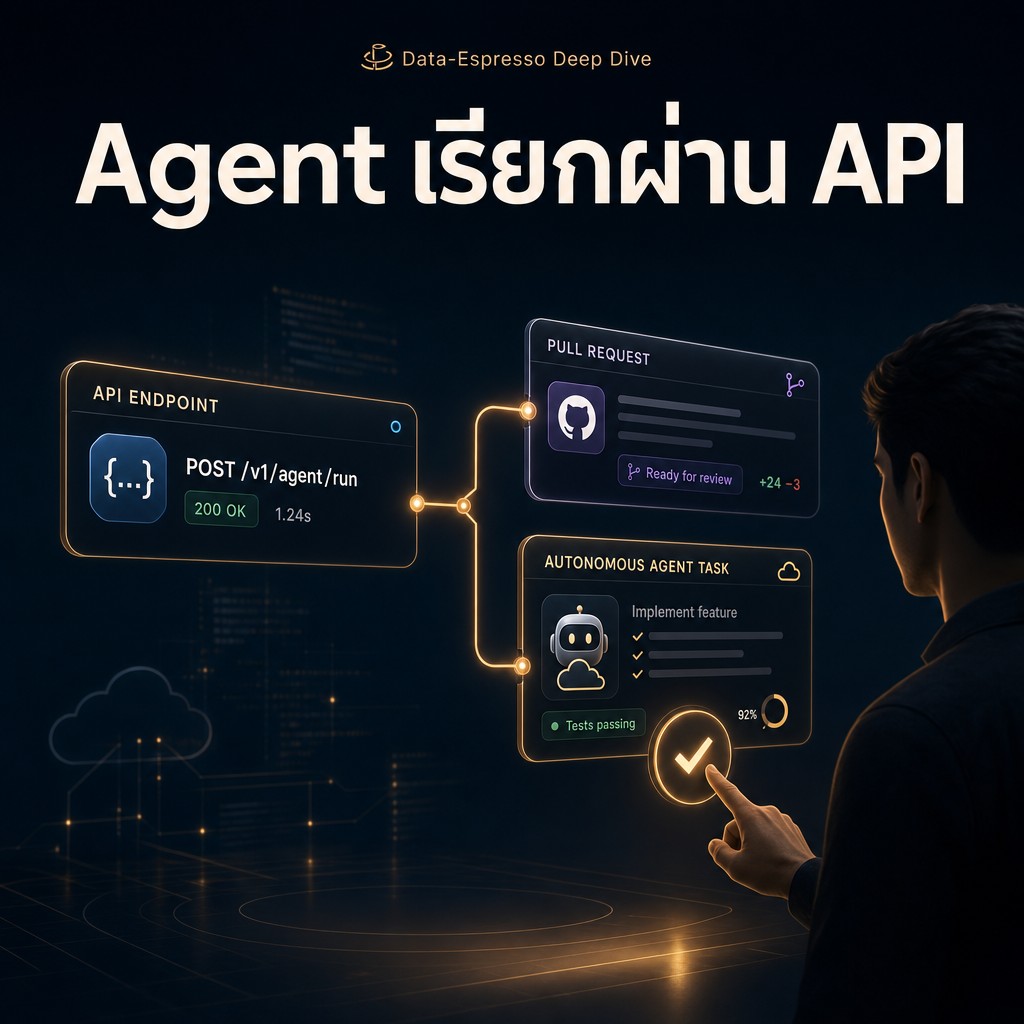
GitHub ประกาศเมื่อวันที่ 13 พฤษภาคม 2026 ว่า Copilot Business และ Copilot Enterprise users สามารถเริ่มงาน Copilot cloud agent ผ่าน Agent Tasks REST API ได้แล้วใน public preview
ถ้าอ่านเร็ว ๆ ข่าวนี้อาจดูเหมือน feature API เล็ก ๆ
แต่ในมุม operator ผมคิดว่านี่เป็นสัญญาณสำคัญมาก:
coding agent กำลังขยับจากเครื่องมือส่วนตัวของ developer ไปเป็น workflow primitive ขององค์กร
เดิมทีหลายทีมใช้ coding agent ผ่าน UI:
- เปิด editor
- เปิด GitHub
- เขียน prompt
- รอ agent ทำงาน
- review diff หรือ PR
แต่เมื่อ agent เริ่มถูกเรียกผ่าน API ได้ ภาพจะเปลี่ยนทันที
ระบบอื่น ๆ เช่น internal developer portal, CI/CD, release tool, backlog automation, migration script หรือ platform workflow สามารถสร้างงานให้ agent ได้โดยตรง
นี่ไม่ได้แปลว่าองค์กรควรปล่อยให้ agent ทำทุกอย่างเองทันที
แต่แปลว่าเราต้องเริ่มออกแบบ agent เหมือน worker ที่มี queue, scope, proof, approval และ audit trail
1) เกิดอะไรขึ้น
จาก GitHub Changelog, Agent Tasks REST API ทำให้ผู้ใช้ Copilot Business และ Copilot Enterprise สามารถเริ่ม Copilot cloud agent tasks แบบ programmatic ได้
GitHub อธิบายว่า Copilot cloud agent ทำงานเบื้องหลังใน development environment ของตัวเอง สามารถแก้โค้ด validate changes แล้วเปิด pull request ได้
ตัวอย่าง use case ที่ GitHub ยกมา ได้แก่:
- fan out refactors หรือ migrations หลาย repository จาก script เดียว
- set up repository ใหม่จาก internal developer portal
- prepare release รายสัปดาห์ รวมถึง release notes
เริ่ม task แล้วสามารถ track progress ผ่าน API ได้ด้วย
GitHub Docs ระบุ endpoint หลักคือ:
POST /agents/repos/{owner}/{repo}/tasks
parameter ขั้นต่ำคือ prompt
และมี optional fields เช่น base_ref, model, และ create_pull_request
ในเอกสาร REST API GitHub ระบุด้วยว่า endpoint นี้ยังเป็น public preview และใช้ได้เฉพาะ Copilot Business หรือ Copilot Enterprise subscription
เรื่อง auth ก็สำคัญ:
GitHub Docs ระบุว่า Agent Tasks API รองรับ user-to-server tokens เช่น personal access token, OAuth app token หรือ GitHub App user-to-server token แต่ไม่รองรับ GitHub App installation access token สำหรับ server-to-server flow ในตอนนี้
นี่คือรายละเอียดที่ operator ต้องสนใจ เพราะมันกระทบวิธีออกแบบ automation และ permission boundary โดยตรง
2) สิ่งที่เปลี่ยนไม่ใช่แค่ “มี API”
API ตัวนี้สำคัญเพราะมันเปลี่ยนตำแหน่งของ coding agent ใน workflow
ก่อนหน้านี้ agent จำนวนมากยังผูกกับการกดใช้ของคน:
- คนเลือก repo
- คนเขียน task
- คนกด start
- คนกลับมา review
แต่เมื่อมี API ระบบอื่นเริ่มเป็นคนสร้าง task ได้
ตัวอย่าง:
support ticket ที่ซ้ำบ่อยอาจสร้าง draft fix task
security scanner อาจเปิด remediation task
release checklist อาจให้ agent เตรียม changelog และ bump version
internal portal อาจให้ทีม product กดสร้าง repo พร้อม baseline code
platform team อาจ fan out migration across services
นี่คือจุดที่ AI agent เข้าไปใกล้ operating system ของบริษัทมากขึ้น
ไม่ใช่ในความหมายว่า agent คุมทุกอย่าง
แต่ในความหมายว่า agent กลายเป็นขั้นตอนหนึ่งใน workflow ที่ระบบอื่นเรียกใช้ได้
3) API-driven agent ต้องมี guardrail มากกว่า chat-driven agent
เวลา agent อยู่ใน chat window ความเสี่ยงส่วนหนึ่งยังถูกจำกัดด้วย human-in-the-loop แบบธรรมชาติ
คนต้องเปิดหน้า
คนต้องพิมพ์
คนต้องกด
แต่เมื่อ agent ถูกเรียกผ่าน API friction เหล่านั้นหายไป
ถ้าออกแบบดี มันคือ leverage
ถ้าออกแบบไม่ดี มันคือระบบผลิตงานพังได้เร็วขึ้น
ทีมจึงต้องตั้ง guardrail อย่างน้อย 7 ชั้น:
- Task boundary – agent รับงานชนิดไหนได้บ้าง และงานไหนห้ามรับ
- Repo boundary – repo ไหนเปิดให้ agent ทำงาน และ repo ไหน read-only
- Token boundary – token ที่เรียก API มี scope แคบพอหรือยัง
- Branch boundary – agent ทำงานบน branch แยกเสมอหรือไม่
- PR boundary – task ไหนเปิด PR ได้เอง และ task ไหนต้องจบที่ diff เท่านั้น
- Approval boundary – action ไหนต้องให้คน approve ก่อน merge หรือ deploy
- Cost boundary – task automation มี budget, retry และ timeout ชัดหรือไม่
นี่เป็นเหตุผลที่ผมไม่ชอบคำว่า fully autonomous แบบลอย ๆ
คำถามจริงคือ:
autonomous ใน boundary ไหน
agent ที่สร้าง PR ใน sandbox พร้อม test result อาจยอมรับได้
agent ที่ merge เข้า production เองโดยไม่มี approval อาจยังไม่ควรเกิด
4) Proof layer จะสำคัญกว่าคำตอบสวย ๆ
เมื่อเราเรียก agent ผ่าน API เราไม่ได้ต้องการคำตอบยาว ๆ
เราต้องการ proof ว่างานที่สั่งไปเกิดขึ้นจริงและตรวจได้
สำหรับ coding agent, proof ที่ควรเก็บมีอย่างน้อย:
- task id
- prompt หรือ task spec ที่ส่งเข้าไป
- repo และ base branch
- branch หรือ PR ที่ agent สร้าง
- status timeline
- test/build result
- diff summary
- known failure หรือ reason ที่หยุด
- reviewer ที่รับช่วงต่อ
ถ้าไม่มี proof เหล่านี้ agent จะกลายเป็น black box
และ black box ที่ถูกเรียกผ่าน API คือ operational risk
ในทางกลับกัน ถ้า proof ดี agent task จะเริ่มคล้ายงานที่เรามอบหมายให้คนในทีม:
มี ticket
มี owner
มี output
มี review path
มี audit trail
นี่คือ mindset ที่ธุรกิจควรใช้กับ AI worker
ไม่ใช่ถามว่า model ฉลาดแค่ไหนอย่างเดียว
แต่ถามว่า workflow รับผิดชอบ output ได้แค่ไหน
5) ทีมไทยควรเริ่มจากงานเล็กที่มี spec ชัด
ผมไม่คิดว่าทีมไทยควรเริ่มจากการให้ API สั่ง agent ทำงานใหญ่ที่สุดทันที
ให้เริ่มจากงานที่มีคุณสมบัติ 5 ข้อ:
- ซ้ำบ่อย
- scope แคบ
- test หรือ validation มีอยู่แล้ว
- rollback ง่าย
- คน review รู้ว่าต้องดูอะไร
ตัวอย่างที่เหมาะกว่า:
- update dependency ใน repo non-critical
- refactor naming pattern ที่ชัด
- generate release notes draft
- เพิ่ม test สำหรับ bug ที่ reproduce ได้
- migrate config format ที่มี schema
- สร้าง PR draft จาก issue template ที่ละเอียด
ตัวอย่างที่ยังไม่ควรรีบ:
- เปลี่ยน payment logic
- migrate production database
- แก้ auth/permission โดยไม่มี test
- deploy production อัตโนมัติ
- เปลี่ยน pricing หรือ public copy โดยไม่มี approval
พูดง่าย ๆ:
ให้ agent เริ่มจากงานที่ “ถ้าพลาด เราจับได้เร็วและถอยได้”
ไม่ใช่งานที่ “ถ้าพลาด เรารู้หลังลูกค้าเจอแล้ว”
6) จาก developer productivity ไปสู่ operating design
ข่าว GitHub Agent Tasks API ทำให้เห็น direction เดียวกับหลายข่าวช่วงนี้:
- agent มี cloud environment ของตัวเอง
- agent ทำงานแบบ asynchronous
- agent เปิด PR หรือ output ที่ review ได้
- agent เริ่มมี API ให้ระบบอื่นเรียก
- agent ต้องมี permission, audit, cost และ approval
นี่คือเหตุผลที่ผมมองว่า AI coding agent ไม่ใช่แค่ developer productivity tool อีกต่อไป
มันกำลังกลายเป็น operating design problem
บริษัทต้องตอบว่า:
- งานแบบไหนควรถูกแปลงเป็น agent task
- ใครมีสิทธิ์สร้าง task
- task เข้าคิวไหน
- task ไหนต้องใช้ model แพง
- task ไหนต้อง human approval
- task ไหนสร้าง PR ได้
- task ไหนแค่เสนอ patch
- proof อยู่ที่ไหน
- ถ้า task ล้มเหลวใครรับช่วงต่อ
ถ้าตอบได้ agent จะเริ่มช่วยลดงานซ้ำจริง
ถ้าตอบไม่ได้ agent จะเพิ่มงาน follow-up ให้ senior engineer
และนั่นคือจุดที่ความเร็วกลายเป็นภาระ
7) มุมมองของผม
ผมคิดว่า GitHub Agent Tasks API เป็นข่าวที่ควรอ่านในมุม workflow มากกว่ามุม feature
เพราะสิ่งที่เกิดขึ้นคือ:
agent เริ่มถูกเรียกเหมือน service
เมื่อ agent เป็น service ได้ สิ่งที่ตามมาคือ:
- contract
- authentication
- permission
- queue
- rate limit
- cost control
- observability
- approval
- incident handling
นี่คือภาษาของ operations ไม่ใช่ภาษาของ prompt engineering อย่างเดียว
สำหรับ Data-Espresso ผมมองว่าบทเรียนคือ:
อย่าเริ่มจากการถามว่า “จะใช้ AI ตัวไหนดี”
ให้ถามว่า:
งานซ้ำแบบไหนในบริษัทควรมี spec ชัดพอที่จะมอบให้ agent ได้
แล้วค่อยออกแบบ boundary รอบงานนั้น
agent ที่ถูกเรียกด้วย API จะทรงพลังมาก
แต่พลังนั้นควรถูกผูกกับ workflow ที่ตรวจได้
ไม่ใช่ผูกกับความหวังว่า AI จะทำถูกเองทุกครั้ง