 Skip to content

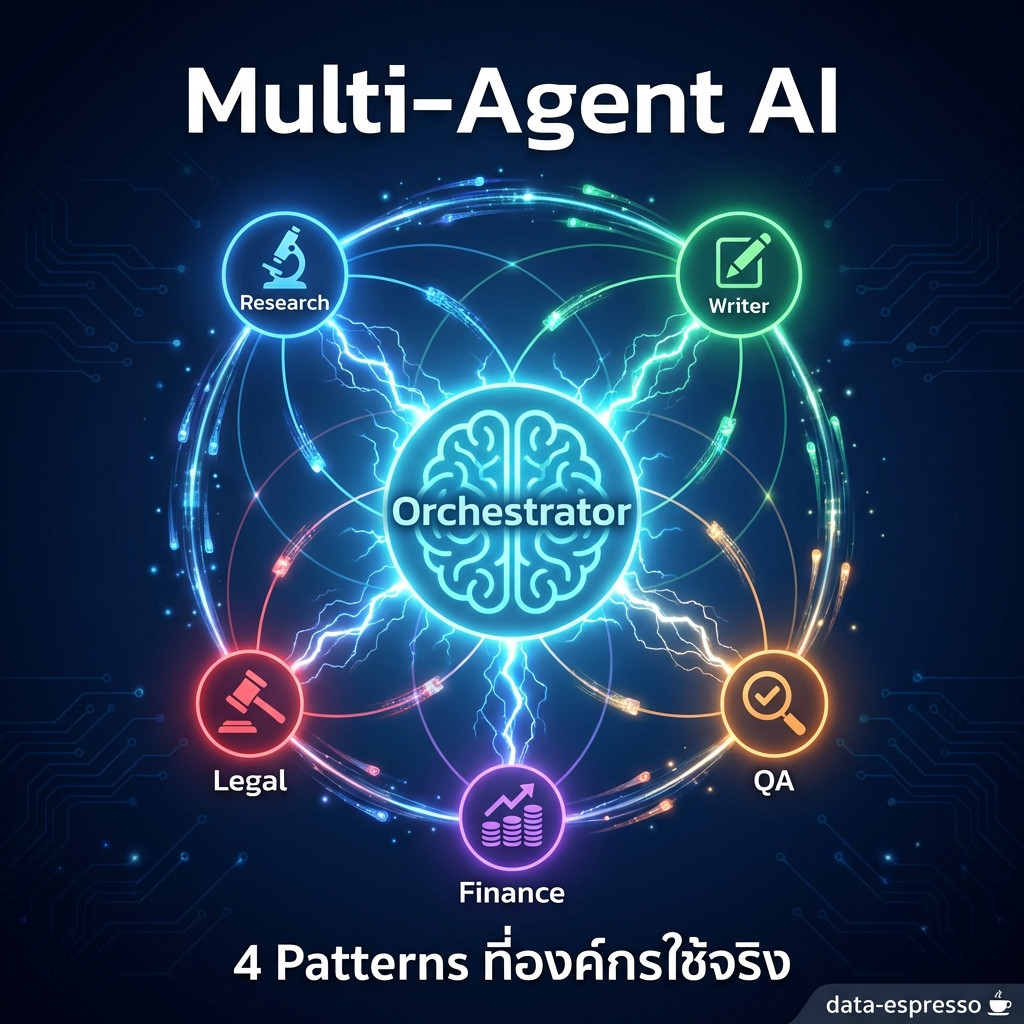
Multi-Agent Orchestration คืออะไร — และทำไมองค์กรไทยต้องรู้ก่อนปี 2027
ในปี 2026 คำว่า “AI Agent” ไม่ได้หมายความว่า AI ตัวเดียวอีกต่อไป Gartner คาดว่า 40% ของ enterprise AI deployments จะใช้ multi-agent architecture ขึ้นจาก 5% ในปี 2024 บทความนี้อธิบาย 4 pattern หลักที่องค์กรใช้จริง พร้อมตัวอย่างจาก Morgan Stanley, Salesforce และแนวทางสำหรับองค์กรไทย
Single Agent vs Multi-Agent ต่างกันอย่างไร?
Single Agent เหมือนพนักงานคนเดียวทำทุกอย่าง — ทำได้หมด แต่ไม่เก่งสักอย่าง และถ้างานซับซ้อนเกิน context window ก็หยุด
Multi-Agent เหมือนแผนกต่างๆ ที่มีหัวหน้าโปรเจกต์ (Orchestrator) คอยประสานงาน แต่ละ agent เชี่ยวชาญเฉพาะด้าน ทำงานพร้อมกันได้ (parallel) และ fail ได้โดยไม่ล้มทั้งระบบ
4 Patterns หลักที่องค์กรใช้จริง
Pattern 1: Sequential Pipeline
Agent A → B → C ทำงานเป็นสายพาน เหมาะกับงานที่มี step ชัดเจน
ตัวอย่าง: Research Agent → Writer Agent → QA Agent → Publisher Agent
Pattern 2: Parallel Fan-Out
Orchestrator ส่งงานให้ agent หลายตัวพร้อมกัน รวมผลเมื่อเสร็จ เหมาะกับงานที่ต้องการความเร็ว
ตัวอย่าง: วิเคราะห์คู่แข่ง 5 บริษัทพร้อมกันใน 5 Research Agents
Pattern 3: Hierarchical (Multi-level)
Orchestrator บน → Sub-Orchestrator กลาง → Worker Agents ล่าง เหมาะกับ enterprise ที่ซับซ้อน
ตัวอย่าง: CEO Agent ดูภาพรวม → Department Agents → Task Agents ปฏิบัติงาน
Pattern 4: Debate/Consensus
หลาย agents วิเคราะห์ปัญหาเดียวกันจากมุมต่างกัน “โต้เถียง” จนได้คำตอบที่ดีที่สุด ลด hallucination
ตัวอย่าง: Legal vs Business vs Financial agents ช่วยตัดสินใจ M&A
ตัวอย่างจากองค์กรที่ใช้แล้ว
Morgan Stanley — Wealth Management
– Research Agent: ข้อมูลตลาด real-time
– Risk Agent: วิเคราะห์ portfolio risk
– Compliance Agent: ตรวจ regulatory requirements
– Advisor Agent: รวมผลเสนอ advisor มนุษย์
Salesforce Agentforce — Customer Service
– Triage Agent: รับ inquiry จัดประเภท
– Specialist Agents: billing / technical / returns แยก domain
– Escalation Agent: ส่งต่อ human เมื่อจำเป็น
ผลลัพธ์: 40% ของ cases resolve โดยไม่ต้องมี human
ความท้าทายที่ไม่ค่อยมีคนพูดถึง
| ความท้าทาย | รายละเอียด |
|---|---|
| Coordination Overhead | ยิ่ง agent เยอะ ยิ่งใช้ token สื่อสาร ค่าใช้จ่ายสูง |
| Error Propagation | Agent แรก hallucinate → agent ถัดไป build on ข้อมูลผิด |
| Agent Trust | Sub-agent โดน prompt injection → คำสั่งเปลี่ยน |
| Observability | Debug ยากเมื่อ 10 agents ทำงานพร้อมกัน |
Framework ที่ใช้จริงในปี 2026
– LangGraph — graph-based, visual debugging, Python ecosystem
– AutoGen (Microsoft) — agent-to-agent dialogue, flexible
– CrewAI — role-based, syntax ง่าย เหมาะ prototype เร็ว
– Claude Native — tool_use + subagent spawning ผ่าน API โดยตรง
– AWS Multi-Agent Orchestrator — managed service สำหรับ enterprise
องค์กรไทยควรเริ่มจากที่ไหน?
อย่าเริ่มจาก framework — เริ่มจาก use case:
ถามตัวเองว่า: “มี workflow ไหนที่ทีมทำซ้ำๆ ทุกวัน ใช้ข้อมูลหลายแหล่ง และผลลัพธ์ชัดเจน?”
Use cases เหมาะสำหรับ SME ไทย:
– Report Generation: CRM + ERP + Analytics → รายงานอัตโนมัติ
– Customer Triage: รับ inquiry → จัดประเภท → ตอบหรือ route ถึงคนที่ถูกต้อง
– Content Pipeline: Research → Draft → Review → Publish อัตโนมัติ
เริ่มด้วย 2-3 agents ก่อน ไม่ต้อง complex ตั้งแต่วันแรก
FAQ
Q: Multi-Agent ต่างจาก RPA (Robotic Process Automation) ยังไง?
A: RPA ทำตาม rule ที่ fixed ไว้ล่วงหน้า ถ้า UI เปลี่ยน RPA พัง Multi-Agent ใช้ LLM ที่ reason และ adapt ได้ สามารถจัดการ edge cases ที่ไม่เคยเห็นมาก่อนได้
Q: ค่าใช้จ่ายแพงไหมเมื่อเทียบกับ single agent?
A: แพงกว่าครับ เพราะมี coordination overhead และ API calls เพิ่ม แต่ถ้า design ดี parallel execution ช่วยลด latency และ ROI จากงานที่ซับซ้อนคุ้มค่ากว่า ควรเริ่ม benchmark ค่า token ก่อน deploy production
Q: ต้องมีทีม data science ถึงจะทำได้ไหม?
A: ไม่จำเป็นครับ Framework อย่าง CrewAI และ Claude API ทำให้นักพัฒนา Python ทั่วไป build multi-agent ได้ ความเข้าใจ LLM และ prompt engineering สำคัญกว่า data science background
Q: Security ต้องระวังอะไรเป็นพิเศษ?
A: Prompt injection คือความเสี่ยงหลัก — ถ้า agent ไปดึงข้อมูลจาก external source ที่มี malicious instruction อาจ hijack การทำงาน ควรมี input validation, output sanitization, และ permission boundary ที่ชัดเจนระหว่าง agents
Q: องค์กรไทยส่วนใหญ่อยู่ระดับไหนแล้ว?
A: ส่วนใหญ่ยังอยู่ระดับ single chatbot หรือ single agent ครับ องค์กรที่เริ่ม multi-agent มักเป็น fintech หรือ large enterprise ที่มี IT team แข็งแกร่ง SME ส่วนใหญ่ยังมีโอกาส early mover advantage
—
อ่านเพิ่มเติม:
– [AI Agent Memory Patterns ที่ทีมไทยใช้ได้จริง](/ai-agent-memory-patterns-thai-teams/)
– [Agentic AI Security Risks ที่องค์กรไทยต้องรู้](/agentic-ai-security-risks-thai-enterprise/)
—
ติดตาม Data-Espresso สำหรับ AI insights ย่อยง่ายทุกวัน: [data-espresso.com](https://data-espresso.com) ☕