 Skip to content

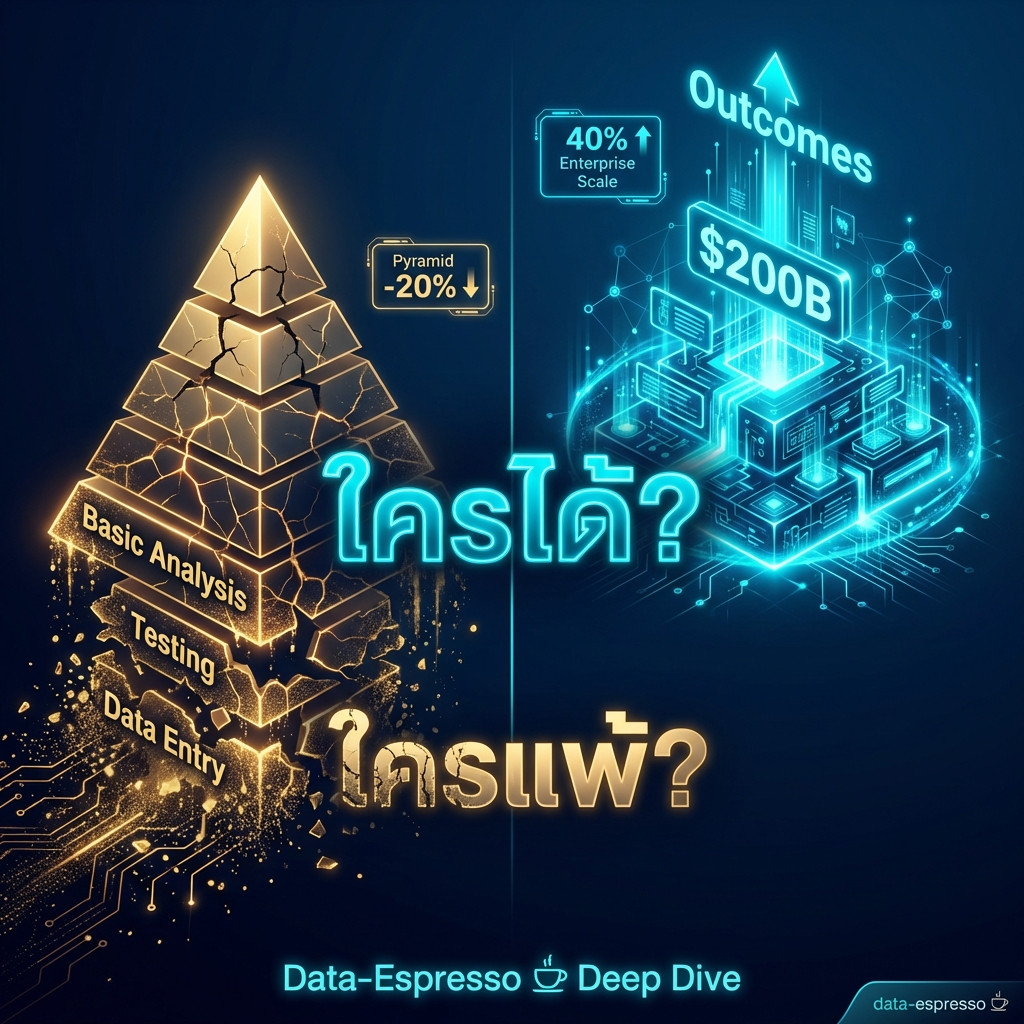
BCG รายงาน: AI Agents จะสร้าง $200B — แต่คนที่ “แพ้” คือ IT Service ที่ไม่ปรับตัว
BCG รายงานว่า agentic AI จะสร้าง opportunity มูลค่า $200 พันล้านใน enterprise แต่ในเวลาเดียวกัน service delivery pyramid จะหด 10-20% ใน 24 เดือน บทความนี้ถอดรหัสว่าใครได้ ใครแพ้ และ SME ไทยควรทำอะไร
ตัวเลขจาก BCG
– 40% ของ enterprise ขนาดใหญ่ deploy agentic AI at scale แล้ว
– 45% เพิ่ม AI spending ปีนี้แม้งบ IT รวมจะแน่น
– 2/3 ของ enterprise ต้องการ partner ที่ build AND operationalize ครบ
– Insurance, finance, healthcare = 3 sectors ที่ move เร็วที่สุด
Case จริงที่พิสูจน์แล้ว
| บริษัท | ใช้ AI ทำอะไร | ผลลัพธ์ |
|---|---|---|
| Verizon | AI agent สำหรับ sales team | +40% productivity |
| Nubank | Customer service agents | 12x efficiency |
| Oracle | Invoice processing | -80% cycle time |
ทั้งสามเป็น production deployment จริง ไม่ใช่ pilot
Service Delivery Pyramid กำลัง Collapse
โมเดล traditional ของ IT consulting: จ้างคน junior จำนวนมากทำ repetitive work ข้างล่าง pyramid — นี่คือ revenue model ของ Accenture, TCS, Wipro และ IT house ทั่วไป
BCG บอกว่า AI agents กำลัง eat ส่วนล่างของ pyramid นี้:
– Data processing & entry
– Software testing แบบ manual
– Report generation & basic analytics
– Tier 1-2 customer support
งานเหล่านี้ agent ทำได้เร็วกว่าและถูกกว่า — value proposition ของบริษัทที่ขาย “hours” กำลังหายไป
ใครได้ $200B นั้น?
BCG ไม่ได้บอกว่า market หดตัว — บอกว่า market เปลี่ยนรูป เงินจะไหลไปหา:
1. Outcome sellers — ขายผลลัพธ์จริง ไม่ใช่ hours
2. Domain IP holders — มี expertise ใน niche ที่ AI general model ทำไม่ได้
3. Build + Operationalize players — ทำครบ ไม่ใช่แค่ deliver แล้วหายไป
4. Platform providers — infrastructure ที่ AI agents ต้องอาศัย
3 ประเภทบริษัทที่จะรอด
Platform Builders: สร้าง infrastructure สำหรับ AI agents — cloud, data pipeline, orchestration
Domain Experts + AI: Deep expertise ใน niche + รู้วิธีใส่ AI agents ใน context นั้น
Outcome Integrators: ขาย “ผลลัพธ์ที่วัดได้” พร้อม SLA — ไม่ใช่ software หรือ consulting
สิ่งที่ทำได้เลยวันนี้
IT Service / Consulting:
– Audit ว่า revenue มาจาก “hours-based work” ที่ AI ทำได้กี่ %
– สร้าง use case ที่มี measurable outcome: “เราลด X ได้ Y%”
Enterprise ที่ซื้อ IT services:
– ถามผู้ให้บริการว่า AI agents อยู่ใน delivery model ยังไง
– ถ้าตอบไม่ได้ชัด → ยังไม่ได้ปรับตัว
Tech Talent:
– เปลี่ยนจาก “ฉันทำ X งาน” เป็น “ฉันออกแบบ systems ที่ทำ X งาน”
FAQ
Q: $200B opportunity นี้หมายความว่า IT jobs จะเพิ่มหรือลดลง?
A: BCG บอกว่า total headcount อาจเพิ่มขึ้นถ้า demand ขยายพร้อมกัน เหตุผล: AI ลด cost ของ service → ลูกค้าใหม่ที่เคย “afford ไม่ได้” เริ่ม access ได้ → market ใหญ่ขึ้น แต่ skills ที่ต้องการเปลี่ยนแน่นอน
Q: IT Service company ไทยจะรอดได้ไหม?
A: รอดได้ถ้าเปลี่ยน model จาก “hours” เป็น “outcomes” เร็วพอ บริษัทที่มี domain expertise เฉพาะทาง (เช่น healthcare IT, fintech) มีโอกาสดีกว่า generalist
Q: SME ไทยที่ไม่ใช่ IT company จะได้ประโยชน์จาก AI agents ยังไง?
A: ในฐานะผู้ใช้ ถ้า IT service providers ปรับตัว SME จะได้ใช้บริการที่ดีขึ้นในราคาถูกลง ถ้า providers ไม่ปรับตัว SME อาจ bypass ไปใช้ AI tools โดยตรงแทน
Q: “Service delivery pyramid หด 10-20%” หมายความว่าอะไรในทางปฏิบัติ?
A: หมายความว่า งานเดิมที่ต้องใช้คน 100 คน จะเหลือแค่ 80-90 คน งานส่วนที่หายไปคือ routine task ข้างล่าง pyramid ส่วน senior และ specialized roles ยังคงอยู่หรืออาจเพิ่ม
Q: BCG report นี้น่าเชื่อถือแค่ไหน?
A: BCG เป็น consulting firm ที่ทำ primary research กับ enterprise clients โดยตรง ตัวเลขจากรายงานนี้มาจาก survey และ case studies จริง ไม่ใช่ model predictions เท่านั้น
บทสรุป
$200B ไม่ได้กระจายให้ทุกคน — มัน concentrate อยู่กับบริษัทที่ปรับตัวเร็วพอ
เปลี่ยนจาก hours → outcomes, จาก pilot → operationalize, จาก tools → IP นั่นคือ trajectory ที่ BCG บอกว่าชนะ
—
อ่านเพิ่มเติม:
– [Anthropic Enterprise Agents — AI เริ่มทำงานแทนแล้ว](/anthropic-enterprise-agents-thai/)
– [Agentic AI Security Risks ที่องค์กรไทยต้องรู้](/agentic-ai-security-risks-thai-enterprise/)
—
ติดตาม Data-Espresso สำหรับ AI insights ย่อยง่ายทุกวัน: [data-espresso.com](https://data-espresso.com) ☕