 Skip to content

AI Agent Memory Patterns ที่ทีมไทยใช้ได้จริง
AI Agent ที่ดีต้องจำได้ — ไม่ใช่แค่ตอบคำถาม ปัญหาหลักของ AI ที่ทีมไทย deploy ส่วนใหญ่คือ “amnesia” ทุก session ใหม่ทุกอย่างหาย บทความนี้อธิบาย 4 Memory Patterns ที่ใช้ได้จริงในปี 2026 พร้อม tools และ architecture สำหรับทีมที่ไม่ต้องการทีม AI research ขนาดใหญ่
ทำไม AI Agent Memory ถึงสำคัญ
AI Agent ที่ไม่มี memory ที่ดีคือ employee ที่ลืมทุกอย่างทุกเช้า ไม่ว่าจะฉลาดแค่ไหนก็ทำงาน production จริงไม่ได้ Memory architecture คือส่วนที่เปลี่ยน “demo ที่น่าประทับใจ” เป็น “ระบบที่ใช้งานได้จริงทุกวัน”
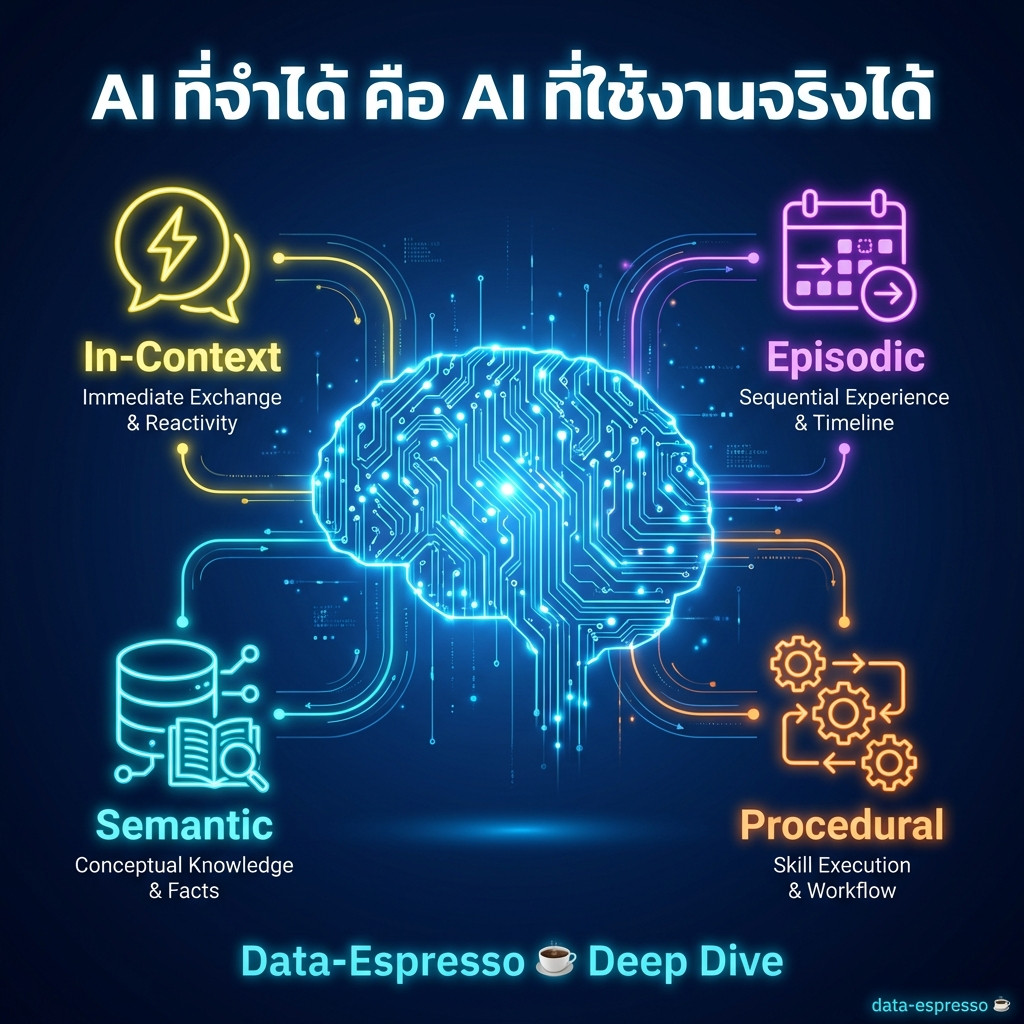
4 Core Memory Patterns
1. In-Context Memory (Short-Term / Working Memory)
“Working memory” ของ Agent — ทุกอย่างที่อยู่ใน conversation window ปัจจุบัน
วิธีใช้ให้ถูก:
– ใส่เฉพาะ context ที่จำเป็นสำหรับ task ปัจจุบันเท่านั้น
– ถ้า conversation ยาว → compress ประวัติเป็น summary แล้วใส่ summary แทน log เต็ม
ตัวอย่างจริง: Customer service bot ที่ compress ประวัติลูกค้า 6 เดือนเป็น profile summary 500 token → ประหยัด token 90% แต่ Agent ยังรู้ context ครบ
2. Episodic Memory (Event-Based Long-Term)
เก็บ “เหตุการณ์ที่มีนัยสำคัญ” พร้อม timestamp และ metadata
ใช้สำหรับ:
– Compliance และ audit trail
– Customer service ที่ต้องการ continuity ข้ามวัน
– การ track ว่า Agent ทำ task สำเร็จหรือล้มเหลวอย่างไร
Implement แบบง่าย: Structured log ใน SQLite หรือ Supabase — เก็บ event + timestamp + outcome แล้วให้ Agent query ก่อนทำงาน
3. Semantic Memory (Knowledge Base / RAG)
“Long-term knowledge base” สำหรับข้อมูลที่ไม่เปลี่ยนบ่อย เช่น product catalog, policy, FAQ
Pattern ที่ใช้มากที่สุด: RAG (Retrieval-Augmented Generation) — Agent ดึงข้อมูลที่เกี่ยวข้องจาก vector database มาใส่ context เมื่อต้องการ
ข้อดีหลัก:
– ลด hallucination ได้ชัดมาก เพราะ Agent ตอบจากข้อมูลจริง
– อัพเดทง่าย — แก้ไข knowledge base ไม่ต้อง retrain model
4. Procedural Memory (Skills & Workflows)
Agent เรียนรู้และจำ workflow, rules, และ business logic ที่ใช้ซ้ำได้
ตัวอย่าง:
– Escalation rules: “ถ้า complain เรื่องเงินและลูกค้าเป็น VIP → ส่งต่อ supervisor ทันที”
– Error handling: “ถ้า API timeout 3 ครั้ง → ใช้ fallback endpoint”
วิธีคิดให้ง่าย: Procedural Memory = SOP ขององค์กรที่ยัดให้ Agent รู้ — Agent ทำตาม workflow เหมือน employee ที่อ่าน SOP มาครบ
ตารางเปรียบเทียบ 4 Memory Patterns
| Pattern | เก็บอะไร | Use Case | Storage |
|---|---|---|---|
| In-Context | Session ปัจจุบัน | Real-time chat, live task | Token window |
| Episodic | Events + timestamps | Audit, customer history | DB logs |
| Semantic | Facts, knowledge | Product info, policy | Vector DB / RAG |
| Procedural | Skills, workflows | Business rules, SOP | System prompt, MCP |
Multi-Tier Architecture สำหรับทีมไทย
“`
Tier 1: In-Context
→ Session ปัจจุบัน + compressed summary จาก session ก่อน
Tier 2: Episodic
→ SQLite / Supabase — important events + outcomes
Tier 3: Semantic
→ RAG จาก Google Drive, Notion, หรือ vector DB
Tier 4: Procedural
→ System prompt SOP + MCP tools สำหรับ reusable actions
“`
ไม่ต้องทำครบพร้อมกัน — เริ่ม Tier 1+3 ก่อน ได้ผล 80% ด้วย effort 20%
Tools ที่เริ่มได้เลยวันนี้
Semantic Memory (RAG):
– LangChain + Chroma (open source, รัน local ได้)
– LlamaIndex (เชื่อม Google Drive, Notion ได้ตรง)
– mem0.ai (managed service, setup ง่ายกว่า)
Episodic Memory:
– SQLite / Supabase (event logging)
– Redis (fast retrieval สำหรับ real-time)
Procedural Memory:
– MCP (Model Context Protocol) สำหรับ reusable tools
– Well-engineered system prompt + function definitions
ความผิดพลาดที่ทีมไทยมักเจอ
1. ยัดทุกอย่างใน system prompt → token หมดเร็ว Agent สับสน แก้ด้วย RAG
2. ไม่มี memory เลย → ต้อง brief Agent ซ้ำทุก session แก้ด้วย episodic log + session summary
3. เก็บทุกอย่างไม่ filter → retrieval ช้าลงเรื่อยๆ แก้ด้วย importance threshold
FAQ
Q: RAG กับ Fine-tuning ต่างกันยังไง ใช้อันไหนดีกว่า?
A: RAG ดึงข้อมูลจาก external database ทุกครั้งที่ตอบ — อัพเดทง่าย ค่าใช้จ่ายต่ำ Fine-tuning ฝัง knowledge เข้า model โดยตรง — แม่นกว่าสำหรับ domain-specific แต่แพงและอัพเดทยาก สำหรับทีมส่วนใหญ่ RAG เหมาะกว่าในปี 2026
Q: ทีมเล็ก 2-3 คนจะทำ AI Agent Memory ได้ไหม?
A: ได้ครับ เริ่มจาก In-Context + RAG บน Notion หรือ Google Drive ก่อน mem0.ai หรือ LlamaIndex ช่วย setup ได้เร็ว ไม่ต้องการ ML expertise สูง
Q: Episodic Memory ต่างจาก chat history ยังไง?
A: Chat history เก็บทุกอย่าง Episodic Memory เลือกเก็บเฉพาะ “เหตุการณ์สำคัญ” พร้อม metadata ที่มีความหมาย เช่น decision, outcome, complaint — ทำให้ retrieval แม่นขึ้นและ storage ใช้น้อยกว่า
Q: MCP (Model Context Protocol) เกี่ยวกับ Procedural Memory ยังไง?
A: MCP คือ standard protocol สำหรับ Agent เรียกใช้ tool ภายนอก — เมื่อ Agent รู้ว่ามี tool อะไรบ้างและใช้เมื่อไหร่ นั่นคือ Procedural Memory ในทางปฏิบัติ เช่น “รู้ว่าต้อง query database เมื่อถามเรื่อง pricing”
Q: Graph Memory ที่พูดถึงกันมากคืออะไร?
A: Graph Memory เก็บความสัมพันธ์ระหว่าง entities แทนแค่ vector similarity เช่น “ลูกค้า A เคยซื้อ product B ซึ่ง relate กับ category C” — ดีกว่าสำหรับ reasoning ที่ซับซ้อน แต่ setup ยากกว่า RAG แบบทั่วไป
บทสรุป
เริ่มจาก 2 pattern ก่อน:
1. In-Context + session summary compression
2. Semantic/RAG จาก knowledge base ที่มีอยู่แล้ว
เมื่อต้องการ continuity ข้ามวันเพิ่ม Episodic และเมื่อ workflow ซับซ้อนขึ้นเพิ่ม Procedural
AI Agent ที่จำได้คือ AI Agent ที่ใช้งานได้จริง
—
อ่านเพิ่มเติม:
– [Agentic AI Security Risks — ภัยเงียบที่องค์กรไทยต้องรู้](/agentic-ai-security-risks-thai-enterprise/)
– [Cursor AI vs Claude Code 2026 — ใครเหมาะกับคุณ](/cursor-ai-vs-claude-code-2026/)
—
ติดตาม Data-Espresso สำหรับ AI insights ย่อยง่ายทุกวัน: [data-espresso.com](https://data-espresso.com) ☕